Waterfront homes in St. Margaret’s can be deeply appealing, but they also ask more of you as a buyer. A beautiful view, a private pier, or a broad stretch of shoreline can add value and enjoyment, yet those same features can bring added review around flood risk, permits, shoreline condition, and long-term maintenance. If you are thinking about buying waterfront in this part of Annapolis, understanding the tradeoffs up front can help you make a smarter decision and avoid expensive surprises later. Let’s dive in.
Why St. Margaret’s Is Different
St. Margaret’s is part of the Broadneck Peninsula, just north of Annapolis, in an area shaped by the Severn River, Magothy River, and a network of creeks. As the St. Margaret’s community history notes, this is a waterfront setting tied to multiple bodies of water rather than one uniform shoreline.
That matters because not all waterfront lots function the same way. In a market like St. Margaret’s, one property may offer open views, another may offer better boating access, and another may sit on a quieter creek with different shoreline conditions. Two homes with similar interiors can have very different value depending on what the site itself offers.
Rewards of Buying Waterfront
Buying waterfront in St. Margaret’s can give you something hard to replicate elsewhere in the Annapolis area: a direct connection to the water and the lifestyle that comes with it. Waterfront value is often tied to proximity to water, scenic views, recreation, and environmental quality, according to an EPA review of waterfront property value.
For many buyers, that premium is not just about prestige. You may be paying for morning views, easier access to boating, more privacy between homes, and a stronger sense of place. The same EPA review also found that scenic views can create measurable premiums, which helps explain why waterfront homes often command more than similar inland homes.
Value Comes From the Site
In St. Margaret’s, the site can matter as much as the house. A well-kept home on a less usable lot may compete very differently from a simpler home with stronger frontage, deeper water, or a better dock setup.
That is why waterfront buyers should compare more than square footage and finishes. The strongest properties usually combine view quality, usable frontage, water access, and a shoreline setup that supports your long-term plans.
Risks to Review Before You Buy
The rewards can be real, but so are the risks. Waterfront due diligence in St. Margaret’s should go beyond the standard home inspection and include a close look at flood exposure, regulations, and shoreline structures.
Flood Risk and Insurance
One of the first questions to ask is where the property sits on FEMA’s flood maps. FEMA explains that flood maps identify flood zones, floodplain boundaries, and base flood elevation, and that higher-risk A and V zones can trigger mandatory flood insurance for buyers using certain government-backed loans. You can start with FEMA’s guidance on flood zones and maps.
Elevation matters too. Flood risk is not just about whether a home is near the water. It is also about how the structure sits relative to base flood elevation, which can affect both compliance and insurance pricing.
Anne Arundel County has also highlighted the area’s flooding vulnerability due to its extensive shoreline, and the county’s sea-level rise planning page notes broader local exposure. In the greater Annapolis waterfront market, recurring tidal flooding is part of the larger context buyers should take seriously.
Questions to Ask About Flood History
Anne Arundel County specifically recommends that buyers ask sellers about prior flooding, water intrusion, past disaster assistance, flood-zone status, current flood insurance, and mitigation work. The county’s flood disclosure guidance is a helpful checklist.
Ask direct questions such as:
- Has the home ever flooded?
- Has there been water in the basement or crawlspace?
- Is there a current flood insurance policy?
- Is an elevation certificate available?
- Has the owner completed mitigation work?
If you are buying a premium waterfront property, these answers can materially affect both cost and peace of mind.
Critical Area Rules Matter
Many waterfront properties in Anne Arundel County fall within the Chesapeake Bay Critical Area. According to Anne Arundel County’s Critical Area overview, that regulated area extends 1,000 feet inland from tidal water or tidal wetlands and includes a 100-foot shoreline buffer.
For you as a buyer, that can affect more than future additions. Construction, grading, clearing, pruning, and tree removal can require approval, and in some cases a vegetation management plan may be needed.
Why This Changes Buyer Strategy
A property may look flexible during a showing, especially if the lot feels open or lightly landscaped. But the legal ability to remove vegetation, reshape the shoreline, or expand improvements may be much more limited than it appears.
If you are buying with plans to build out, open views, or redesign the grounds, this is one of the most important reviews to make early.
Piers, Docks, and Shoreline Structures
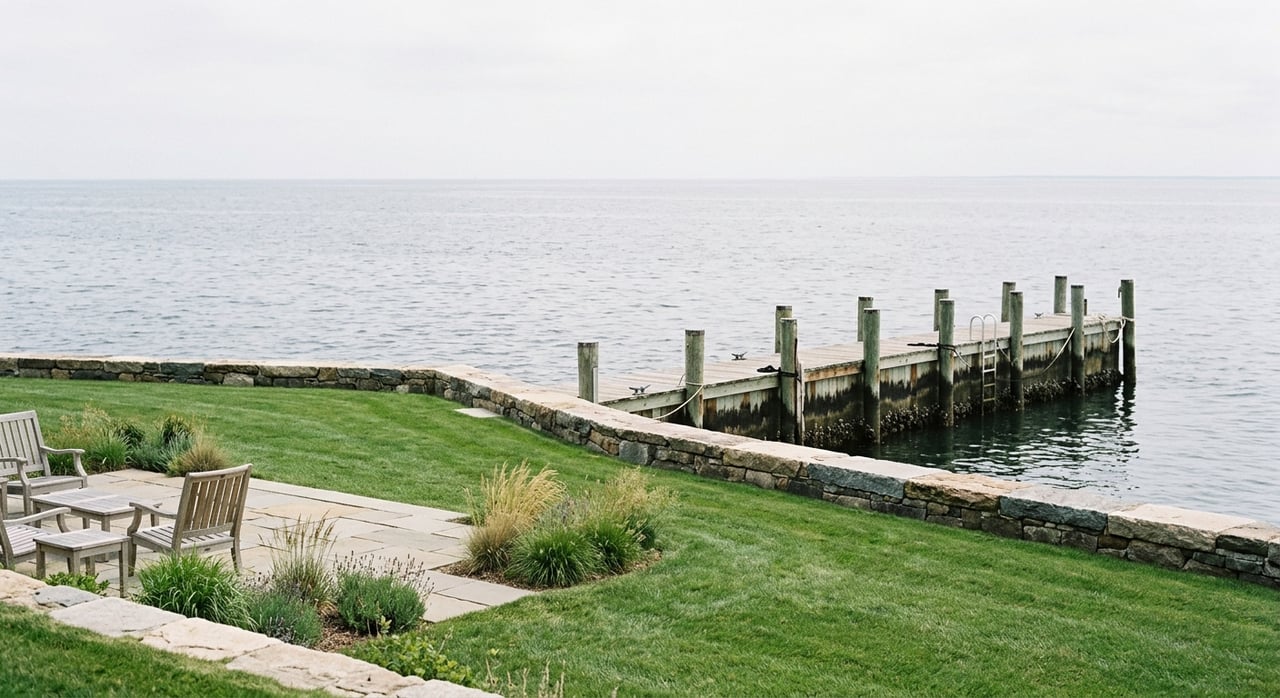
A private pier or bulkheaded shoreline can be a major selling point, but it should never be taken at face value. Existing waterfront improvements need to be reviewed for both condition and permit history.
Maryland DNR explains that work below the average high tide line in tidal wetlands or tidewater generally requires permitting, and Anne Arundel County notes that shoreline work may involve state and local approvals. You can review Maryland’s living shoreline and tidal permitting guidance for context.
Check the Paper Trail
If the property has a pier, mooring pilings, bulkhead, or revetment, ask for documentation. Anne Arundel County’s residential pier checklist shows that private piers are subject to code-based placement limits, including footprint and setbacks.
That means buyers should confirm:
- Whether the structures were permitted
- Whether the current footprint matches approvals
- Whether repairs or reconstruction could trigger new review
- Whether the setup fits your intended boat or use
A pier that works for kayaks and paddleboards may not work for your boating goals. A dock that looks serviceable today may also be difficult or costly to reconfigure later.
Bulkheads vs. Living Shorelines
An aging bulkhead is not just a maintenance issue. It may also affect what kind of shoreline solution is allowed in the future.
Maryland generally prefers living shorelines over hard structures like bulkheads or riprap, unless site conditions make that approach infeasible. Anne Arundel County also emphasizes that erosion control is site-specific and often requires professional assessment.
What Buyers Should Take From This
If a shoreline structure is nearing the end of its life, replacement may not be simple. The future cost, timeline, and type of approved work can depend on wave action, depth, site conditions, and regulatory review.
For a high-value waterfront purchase, that issue belongs in your negotiations and your long-term budget planning.
What Actually Drives Waterfront Value
Not all waterfront premiums come from the same features. In St. Margaret’s, value is often shaped by a mix of view, water depth, frontage, shoreline usability, and legal flexibility.
HUD appraisal guidance distinguishes WaterView from WaterFront, which reinforces an important point for buyers: a water-view home and a true waterfront home are not interchangeable. A beautiful outlook may create strong appeal, but it does not automatically mean the lot offers the same boating utility or shoreline rights as a true waterfront parcel.
Depth, Access, and View Are Separate Inputs
Appraisal materials on waterfront valuation identify factors like water depth, deep-water access, view, and tidal conditions as separate influences on value. The waterfront appraisal guidance cited here supports the idea that buyers should look at these features individually rather than lump them together.
In practical terms, one St. Margaret’s property may offer a dramatic open-water panorama but limited water depth at low tide. Another may offer less expansive views but stronger boating utility. Depending on your goals, either one could be the better value.
A Smart Waterfront Review Checklist
If you are comparing St. Margaret’s homes, start with the site before the finishes. This simple checklist can help you focus on the issues that often matter most.
- Confirm the flood zone and base flood elevation
- Ask whether an elevation certificate is available
- Review any history of flooding, water intrusion, or disaster assistance
- Determine whether the parcel is in the Critical Area
- Ask what shoreline or vegetation changes would require approval
- Review permit history for piers, docks, bulkheads, and other shoreline work
- Check whether the water depth supports your boating plans
- Clarify whether the property is best viewed as water view, true waterfront, or boatable waterfront
That kind of review can give you a much clearer picture of value than square footage alone.
Final Thoughts on Buying Waterfront
Buying waterfront in St. Margaret’s can be incredibly rewarding when the property matches your goals and you understand the site as well as the house. The best opportunities are usually the ones where flood exposure, shoreline condition, dock utility, view quality, and regulatory limits all make sense together.
If you want thoughtful guidance as you compare St. Margaret’s with other Annapolis-area waterfront options, Brian Jacobs offers the kind of local, detailed perspective that can help you evaluate the real tradeoffs and move forward with confidence.
FAQs
What should you review before buying waterfront in St. Margaret’s?
- You should review the flood zone, base flood elevation, flood history, Critical Area restrictions, shoreline permits, pier or dock condition, and water depth at low tide.
How does flood insurance work for waterfront homes in Annapolis?
- FEMA says higher-risk flood zones such as A and V zones can trigger mandatory flood insurance for certain government-backed mortgages, and elevation relative to base flood elevation can affect pricing.
Why do St. Margaret’s waterfront homes vary so much in value?
- Waterfront value can change based on view quality, usable frontage, water depth, dockability, shoreline condition, and recreational utility, even when two homes have similar interiors.
What is the difference between water view and waterfront in St. Margaret’s?
- HUD appraisal guidance treats WaterView and WaterFront as different property characteristics, so a home with a strong view is not automatically equivalent to a lot with direct waterfront access.
Do waterfront properties in Anne Arundel County have shoreline restrictions?
- Yes. Many waterfront properties fall within the Chesapeake Bay Critical Area, where clearing, grading, tree removal, and some other site changes may require approval.
Why does a pier or bulkhead need extra due diligence in St. Margaret’s?
- Piers, docks, and shoreline structures may be subject to permit, setback, and condition issues, and future repairs or changes may require additional review from state or county authorities.